Showing posts with label amulets. Show all posts

Saturday, 12 November 2016

Lion's claw amulit// Pitt Rivers Museum:
Lion's claw amulet from the Pitt Rivers Museum Collection

Saturday, 15 October 2016

amulets and charms

Cow's heart stuck with pins and nails. Used by a dairyman as a talisman against a man he believed had put a curse on his cows. #superstitions #heart #charm:
Cow's heart stuck with pins and nails. Used by a dairyman as a talisman against a man he believed had put a curse on his cows.

"A dairyman from Bethnal Green performed one of the most spectacular pieces of magic that Lovett came across. He had a quarrel with a man and then became convinced that he had put a spell on his cows. Sure enough two of the cows died and so the dairyman went to see a 'wise woman'. Acting on her instructions, he took the heart of one of the dead cows, stuck pins and nails into it, and hung it up in the chimney of the house. When the man who was supposed to have bewitched the cows heard of this he became frightened and came to the dairyman to make reparations admitting that he had poisoned the cows with yew leaves."


Glass scent bottle pendant in the form of an acorn with a brass cap. 

The cap has a pattern resembling that of an acorn. It would have been worn to safeguard against lightning. In the past the Oak tree was thought to be the home of the thunder god. As such, the acorn (or any object made in its shape) was regarded as a charm against lightning. Collected in West London.

Miniature broom with a yellow-green silk ribbon wrapped around the handle and tied in a bow. The broom handle is a big nail, while the base of the broom is half a cork covered in silk ribbon and inserted with nails. It was probably regarded as a pincushion as well as a charm; it was hung on the wall for good luck. Collected in South London.

Irregular-shaped stone with a hole and thick cord tied through the hole. Known as a "hag-stone", it was said to protective horses from being "hag-ridden", namely ridden by witches or pixies during the night. Collected in North London, 1922.

This cap belonged to a street "dentist" or tooth puller. It is made of brown velvet and felt, and decorated with approximately 88 decayed human teeth, once belonging to his patients. The teeth have been drilled and attached with twine. Wearing a cap like this was supposed to imply the "magician" aspect of the dentists work. As teeth pulling was painful and risky and done without anaesthetic, people needed to have some faith in the "dentist", even if it was only the evidence, worn on the cap, that he had successfully plied his trade.


Compass set into a cowry shell, with a metal loop at one end. Japanese good luck charm. These compasses were sold in the Marks and Spencer's Penny Bazaar, and according to Cuming were 'much worn in some parts of London'. #superstitions #shell #charm:
Compass set into a cowry shell, with a metal loop at one end. Japanese good luck charm. These compasses were sold in the Marks and Spencer's Penny Bazaar, and according to Cuming were 'much worn in some parts of London'

Operculum of a Univalve Shell, carried as a mascot for long life. The spiral design is never-ending, and represents eternity. #superstitions #shell #charm:
Operculum of a Univalve Shell, carried as a mascot for long life.
The spiral design is never-ending, and represents eternity.


Figure of a woman holding a child, carved from mandrake root which was said to have curative powers.

Mandrakes have long been surrounded by powerful traditions and beliefs in the UK as elsewhere in Europe. Its distinctive form is often said to resemble a human being, and since Biblical times it has been believed to aid with human conception, in addition to possessing many other magical and curative powers. It was believed that it shrieked when pulled out of the ground and either made you mad, brought you bad luck or even killed you.

Mandrakes had a reputation as a curative well into the 20th century. Edward Lovett found it was still familiar to herbalists in the 1920s. He commented: "Today I know several places in London where mandrake can be bought, and I have two or three records of these little figures being fixed to the bed head 'for good luck'. "


Irregular rounded lump of iron Pyrite. It has small nodules on the surface. Regarded as a thunderbolt and used as a charm against lightning.

Three ivory acorn shaped blind cords, all with concentric rings carved at the tops of the seeds. The cups unscrew to attach the cord. Of a type used all over England in the beginning of the 20th Century as a charm against lightning. In the past, the Oak tree was thought to be the home of the thunder god. As such, the acorn (or any object made in its shape) was regarded as a charm against lightning. As it was generally supposed that lightning enters the house by the window, acorn shaped blind pulls, tassels and curtain pole terminals are common. Umbrellas could also bear acorn shaped ornaments.

text and imagery: Cuming Museum

Wednesday, 28 September 2016


 this dried frog carried in a silk bag was used to prevent fits. Alternatively, another amulet against fits involved wearing a live toad in a bag. Live frogs and toads were also bound on to wounds to help them heal and were placed on the throats of children with whooping cough.

People have carried around amulets and protective objects for millenia. I was lucky enough to visit the Wellcome Collection exhibition on 'Miracles and Charms' back in 2012 and saw the many amulets from Edward Lovett's collection.

The dictionary defines amulets in the following way - "a small object worn to ward off evil, harm, or illness or to bring good fortune; protecting charm". Though many of us might not think this superstition lingers - we might find that we have objects in our living space or wear particular pieces of jewellery which have special significance. The following are some of my favourite 'amuletic' objects...


Stone with natural perforation, found fixed on a nail to the cottage-door of Kimber to keep away witches - often referred to as a hagstone

Large animal lumbar vertebra carved with at one end with a human face.

carrying around this piece of bone was believed to be a cure for rheumatism (aches and pains in the joints), transferring the pain from the person to the bone.


carrying a mole’s forefoot in a pocket as an amulet to prevent cramp is a medical tradition specific to the East Anglian region of England. The feet were either hacked off a mole or bought from a shop. As an amulet against toothache, moles’ feet have a much longer and wider tradition, being recommended by the Roman writer Pliny in the first century CE.

images and text from:
Science Museum
Pitt Rivers | Amulets Blog
Wellcome Collection

Sunday, 18 September 2016

curiosities

Cabinets of curiosities (also known as Kunstkabinett, Kunstkammer, Wunderkammer, Cabinets of Wonder, and wonder-rooms) were encyclopedic collections of objects whose categorical boundaries were, in Renaissance Europe, yet to be defined.

Cabinet of Curiosities, 1690s, by Domenico Remps


I recently found a copy of Taschen's 'Cabinet of Natural Curiosities' which I would definitely recommend purchasing if you like this kind of thing. It contains a huge number of Albertus Seba's beautifully drawn images, many still strange and bizarre today. I particularly like the coral and sea creatures. It's a lovely book to sit and look through, so many little details to focus on, really inspiring if you like drawing yourself, or are just a fan of the freakish and fantastic. Some of his drawings of creatures are unintentionally strange and grotesque - many with quite hilarious expressions!

.:.

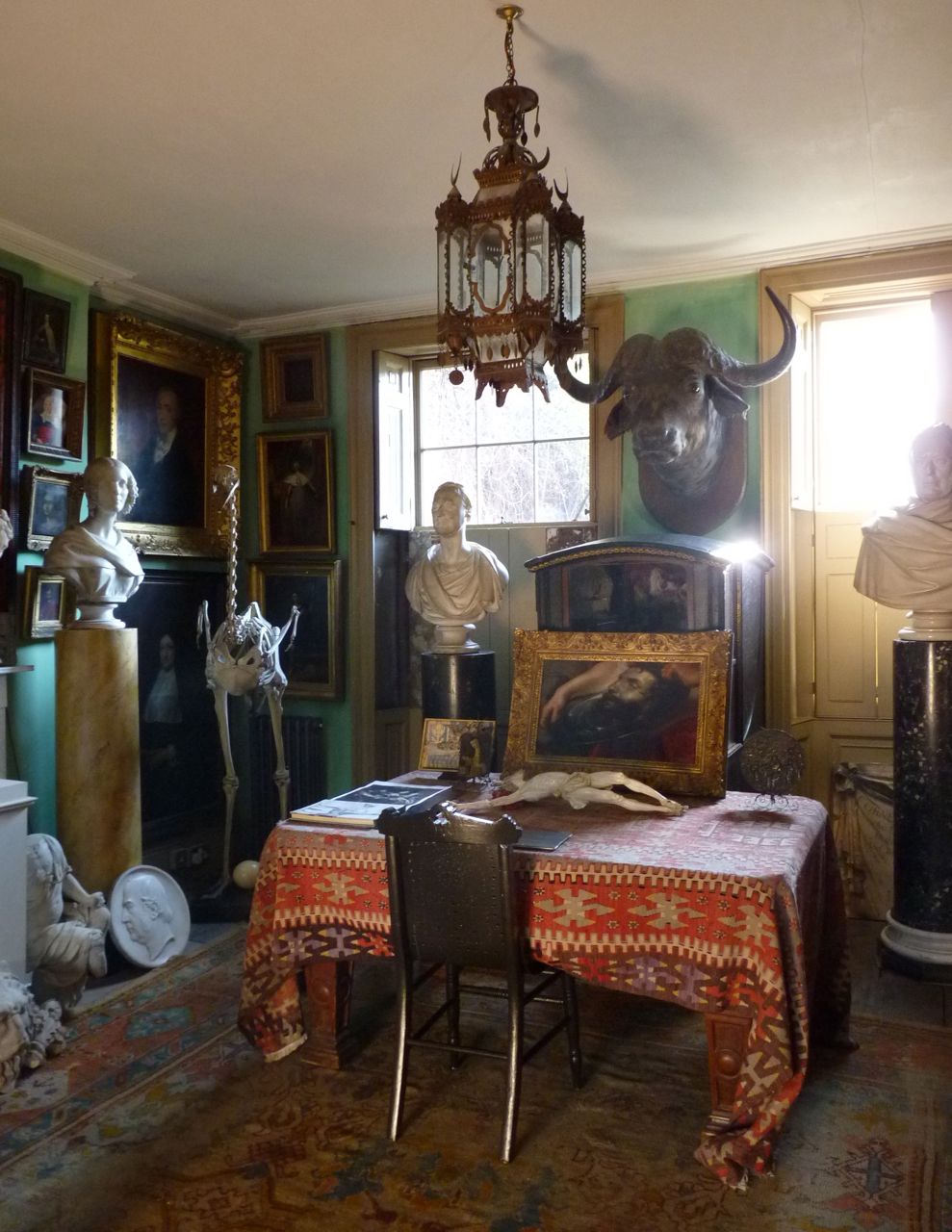
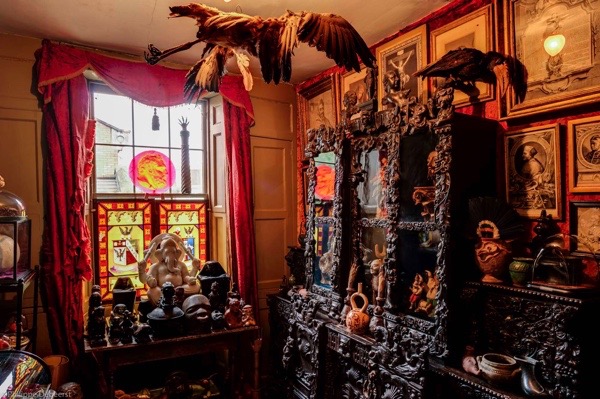
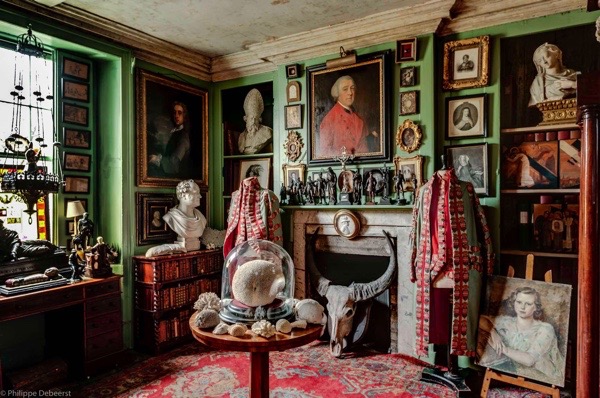
I was browsing through photos of curiosity collections recently on pinterest, and stumbled across these incredible photos of Malpaquet House, stuffed to the rafters with curiosities. I absolutely love this cluttered and eclectic approach to home decor. It is the kind of thing I would attempt if I had my own house, although with a hugely limited budget.


.;.

Finally, a selection of Charivari - these are german hunting amulets - effectively tiny curiosity collections which are worn, typcially around the waist. I absolutely love these, obviously in some respects they symbolise two things I'm not keen on - hunting and male exhibitionism - however they are beautiful objects in their own right. Some of the more elaborate creations almost resemble armour, from a costume graduate's view (and someone who is obsessive regarding amulets) they are an absolute dream!


Monday, 12 September 2016


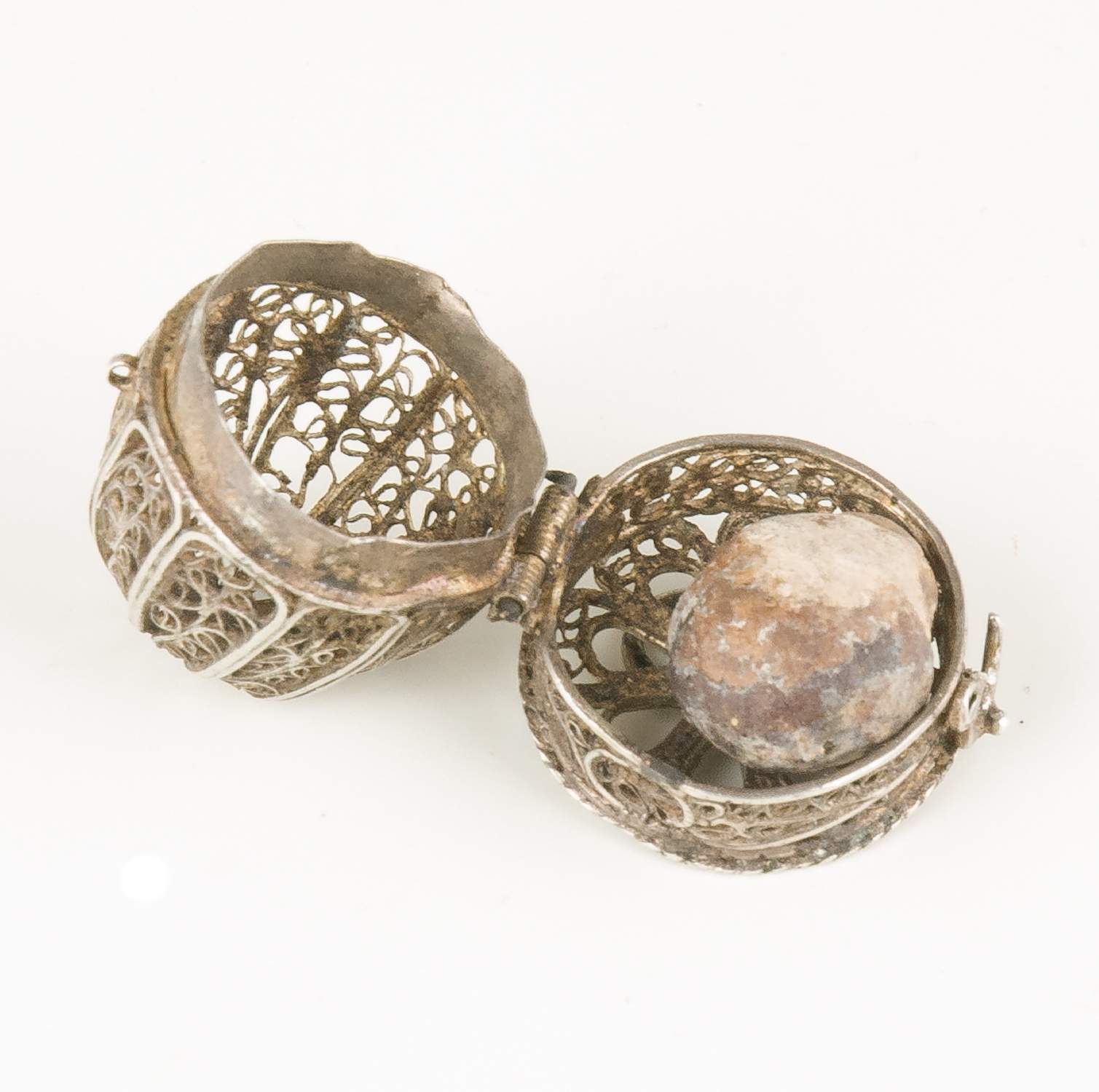
19th century Chinese sterling silver bracelet 
with dragons and carved bezoar face


bezoar's were thought to contain properties which negated the effects of poison, notably arsenic - they were commonly worn as amulets as a result - I'm not sure anyone would have volunteered to wear the above two though, extracted from elephants!